

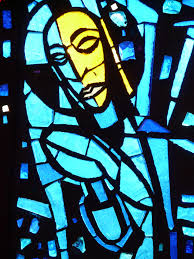
Three vignettes; three perspectives on religion, on faith.
- Easter Sunday, a retirement village in Gettysburg. The previous chaplain there was Lutheran, and the new chaplain most emphatically is not. His background is Church of God, so he has a much more Pentecostal/Evangelical flavor to his preaching. His sermon consisted of the story of a man who was an atheist, and who set out to investigate the resurrection and prove that it was a lie, and it couldn’t have happened. Surprise, surprise: in the course of his scientific/historical investigation, he came to the conclusion that, in fact, there was no other explanation for the events than a literal resurrection. Epilogue? The man became a committed Christian, and apparently there is a best-selling book and a movie. The gospel message of that Easter sermon was that the resurrection really and truly did happen, and therefore we need to believe it and share the story.
- Fast-forward a couple weeks later. I was catching up on my New Yorker magazines and I read an article titled, “St. Paul Remade Human History. How Did He Do It?” by Adam Gopnik. I don’t know Gopnik’s faith background, but he clearly is not a Christian. [Here is one line from the article: “Christianity as we know it…owes more to Paul than to anyone else, perhaps even more than to the narrowly parochial and Jerusalem-centered Jesus.”] As you can guess from the title, the article questioned how Paul managed to have such an impact on the trajectory and spread of this fledgling faith, when there is actually very little that we know about him, and most of what we know is a fabrication—including the majority of Acts [“A detailed story of Paul’s travels and mission, Acts is also generally agreed among scholars to be largely, if not entirely, fictionalized”].
- Last one. Salman Rushdie is one of my favorite authors, and last week, I read Knife, his account of the near-fatal stabbing by a religious extremist, which happened at Chautauqua, New York, in August, 2023. A few years ago, I also read another memoir of his, Joseph Anton, which came out in 2012, detailing the years he spent in hiding and under police protection after the Ayatollah Ruhollah Khomeini, the Supreme Leader of Iran (at the time), issued a fatwa calling for Rushie’s death following the publication of his novel The Satanic Verses. As you might imagine, Rushdie is not a fan of religion—and, no one can really blame him for that. My sense is that, in his view, it is fine if people practice religion in private, in their personal lives, but anytime religion becomes public, it is dangerous, because it becomes political. Generally, he seems to think of religion as primitive superstition, something the early humans created to understand things in the world around them that they feared, or could not explain.
I have been thinking a lot about these three experiences—each of them individually, but also collectively, because together, they push me to ask: How much of the Bible needs to be true, and what is ‘truth’ when it comes to faith, anyway? And, more importantly, what do I believe is true?
Lots could be about this, of course, but I think I want to leave it at this for now.
First, I don’t think that absolutely everything that is recorded in Scripture—including everything about Jesus, including his death and resurrection, is historically and scientifically, true. But, second, I don’t think it needs to be—I don’t think that is the point. That is, I don’t think that historical and scientific categories are the measure by which the truth of Scripture should be judged.
For me, the truth of the Christian faith, at least—I’m not going to try a generalize beyond that—is a relational truth, a truth that is rooted in the experience of a person: my own experience [“I have seen the Lord”], and the experience of others, the larger Christian community [“Many of the Samaritans from that town believed in him because of the woman’s testimony”]. It is a truth that is best described with a story, rather than the contents of an archive or the results of scientific research. It is a truth that has its roots in divine revelation, in a God whom I cannot see, whose existence I cannot prove, but whose traces [“fingerprints”] are everywhere and whose breath I can feel.
According to the Lutheran tradition, when Christians confess that Jesus is truth, we are not saying that we assent to this or that proposition about Jesus, but that we stake our whole lives on him: we cling to him for help and we trust him. We believe that in Jesus, we see God, and through Jesus, we see God’s loving care and vision for the whole creation. In Jesus, I find the truth of my existence, and my call to a life of love and service in the world.
That is truth enough for me.


