
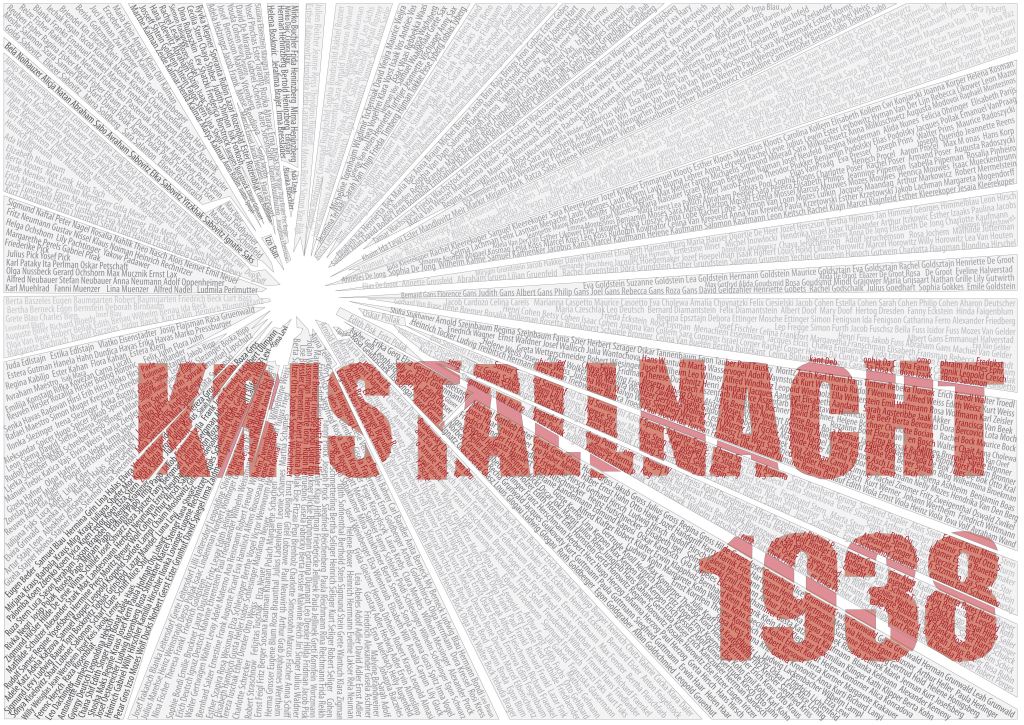
Yesterday, Nov. 10th, was the 87th anniversary of Kristallnacht [and if you don’t know much about it, I encourage you to read more here: https://encyclopedia.ushmm.org/content/en/article/kristallnacht]
Kristallnacht is “the night of broken glass,” and it marked a shift into a very public phase of the state-sanctioned, deadly Anti-Semitism of the Nazi party. Kristallnacht included:
- The vandalism and looting of Jewish businesses and residences
- The destruction and burning of synagogues, including the desecration of Torah scrolls and sacred Jewish objects
- Beatings and attacks of Jewish community members—including public humiliations
- Mass arrests and imprisonment of Jewish men
Following the riots, Jews themselves were forced to pay for the destruction, and were not allowed to seek insurance payments for the damages to either their homes or their businesses.
The Holocaust Encyclopedia explains it this way:
“Kristallnacht was a watershed….The specific violent actions were not unprecedented: vandalism and assault had been Nazi anti-Jewish tactics for years. But, Kristallnacht was shocking—that night, assault, robbery, vandalism, and arson happened all at once, in a short period of time, all across Germany and its annexed territories. These were not isolated acts of violence, but systemic state-sponsored terror.”
You may wonder if all of this went unnoticed; it did not. In Germany itself, many Germans were shocked at the level of violence: some protested, some spoke out, and some tried to help their Jewish neighbors. Internationally, there was also coverage of the events—President Roosevelt denounced the attacks, and in Great Britain, this event sparked the beginning of kindertransports, a means by which many Jewish children escaped Germany.
And yet, it wasn’t enough.
The Nazis were able to move forward their plan of genocide through further systemic stripping of the rights, property and freedom of Jews; from there, it was a short step to mass arrests, deportations, and executions.
We remembered Kristallnacht in chapel yesterday, as we always do, and our senior preacher mentioned it in her sermon. The phrase she used really struck me. She said something like, “silence made way for violence.”
Silence made way for violence.
This is how it works. On scales grand and small, we observe injustices, especially those that happen to someone else, and we weigh the costs of speaking out: it may be risky; it may be inconvenient; it may be embarrassing, or put us at odds with people we love.
So, privately we condemn, but publicly, we say/do nothing.
And, the victimizers think they have support—or, at the very least, they are confident they will not be challenged—and they move forward.
And the victims? They feel vulnerable and alone, and think they are not seen, not valued, not loved.
So, each year, we remember Kristallnacht, and renew our commitment to “never again”—because we know that it could happen again: in any time, in any place, against any marginalized population.
Violence doesn’t need silence to enact its destruction, but silence paves the way.


