
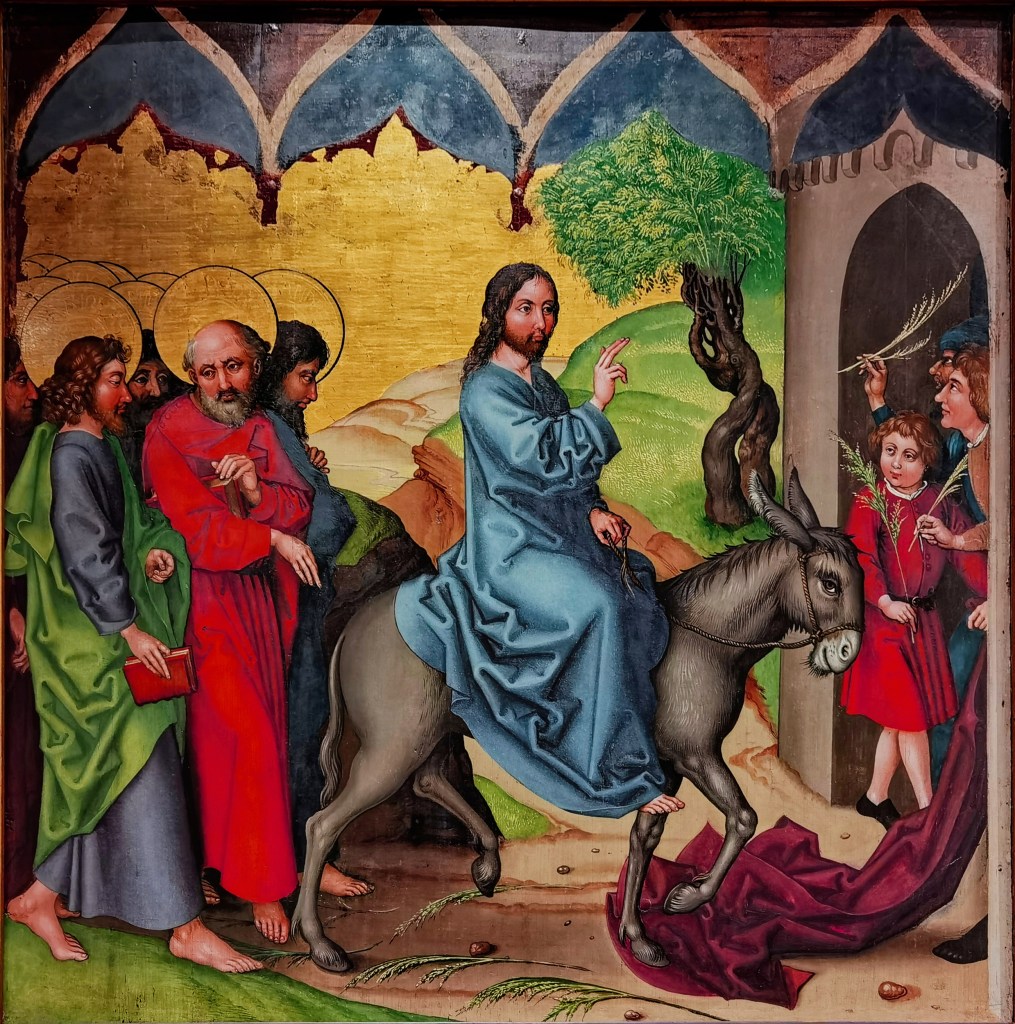
“When he had come near Bethphage and Bethany, at the place called the Mount of Olives, he sent two of the disciples, saying, ‘Go into the village ahead of you, and as you enter it you will find tied there a colt that has never been ridden. Untie it and bring it here. If anyone asks you, “Why are you untying it?” just say this: “The Lord needs it.” ’” Luke 19:29-31
I want to reflect on preparation, and the role preparation has in celebration, and the strange, unpredictable road between the two.
I would argue that there is little, if anything, in this snippet of the Passion Narrative from Luke that suggests what awaits at the end of the coming momentous week in Jerusalem. Using the language of the church’s liturgical calendar, I would say that there is little in these wee morning hours of Palm Sunday that prefigures the coming Friday—and even less than that, the Sunday that will follow.
And yet, so many amazing, transformative stories—perhaps, including your own—have surprising, inauspicious beginnings.
This incongruity reminds us that the road between preparation and celebration is rarely straightforward. I think of the disciples and what this moment encapsulates for them. They have been asked to “borrow” a presumably young, untested colt as preparation for what will be the weirdest, most topsy-turvy triumphal city entrance ever.
Have you ever seen a grown man on a donkey? It doesn’t exactly inspire awe, or convey confidence. And this is just one of the many reversals that we will see during Holy Week that make clear how God’s salvation embodied in Jesus Christ subverts our expectations, and reveals a God who refuses to fit the mold of an earthly ruler. Christ has been preparing the disciples all along for this week, but they still don’t see it coming.
With the cloaks still spread on the ground, we, along with the disciples, begin to see just how little we understand of what is to come: a confusing jumble of unexpected event after unexpected event. Right in the midst of the Hosannas, Jesus weeping over Jerusalem; a dramatic temple cleansing; intensifying nefarious scheming by the religious leaders; a betrayal by a trusted friend; a shocking arrest; a bitter denial; and an ignominious death—all lost. The time between “Hosanna” and “Crucify Him” is the blink of an eye.
The disciples had prepared for Hosanna, but they didn’t see Crucify Him coming. We never do, do we?
And yet, that colt…it should have told them something. In the strange command to secure the colt, which the disciples do follow, we see the trust they have in the one they have fought with, questioned, marveled at, and ultimately put their lives on hold for, to follow for the past three years.
So many things Jesus did and said they did not understand, but they trusted him, and so they did what he said.
And maybe that did prepare them for what was to come after all. That trust certainly didn’t keep them from doubting, it didn’t keep them from falling asleep on the job, and in the end, it didn’t keep them at his side. But when Jesus was raised, when they saw him again—against all odds—somehow, in fits and starts, they found themselves ready. Such that, in the end, each and every one of them ultimately gave his life for the gospel, to spread the good news of the risen Christ.
We don’t always know how the whole fits together. At this moment in our text, we can’t see the end of the story, we can’t presume it, even though we know it by heart. And certainly, the disciples can’t, either. Nevertheless, like the disciples, we also seek to do what God calls us to do in the moment, trusting that our preparation now is paving the way for a celebration in the future—a future we cannot yet see, but a future where God surely is at work, doing a new thing.
Little things set the stage for big things, and celebration can’t happen without preparation.
So often, it is the little moments in our story—the unplanned conversation, the spontaneous “yes,” the unexpected detour—that end up playing a significant role in what is to come. The Holy Spirit is sneaky like that; preparing us for the future God intends, sometimes even in spite of ourselves.
So, as we walk together our Lenten road to the cross and the empty tomb, the path toward the end of the semester and commencement—the final celebration that awaits, may we trust in the ways God is at work in and among us now, preparing us for what is ahead—in ways we don’t always see, or recognize. Celebration awaits—even if we have to pass through shadows to get there. “Hosanna” may not be the last word, but “crucify him” won’t be, either.

 Happy Lutheran