
“When they came to the crowd, a man came to him, knelt before him, and said, ‘Lord, have mercy on my son, for he is an epileptic and he suffers terribly; he often falls into the fire and often into the water. And I brought him to your disciples, but they could not cure him.’ Jesus answered, ‘You faithless and perverse generation, how much longer must I be with you? How much longer must I put up with you? Bring him here to me.’ And Jesus rebuked the demon, and it came out of him, and the boy was cured instantly. Then the disciples came to Jesus privately and said, ‘Why could we not cast it out?’ He said to them, ‘Because of your little faith. For truly I tell you, if you have faith the size of a mustard seed, you will say to this mountain, “Move from here to there”, and it will move; and nothing will be impossible for you.’” Matthew 17:14 to 20
In chapel this morning, we heard a great sermon by the fabulous Deacon Kellie Lisi on this text, which focused on mustard and mustard seeds, and the ability of the Triune God to make the impossible possible. It was hopeful, inspiring and encouraging.
And, at the same time, I admit that, for whatever reason this morning, my brain hit a hard stop at verse 15, which begins the troubling linking in this text between epilepsy and demon possession.
The Bible can be such a joyous, liberating word [as Kellie’s sermon demonstrated]; and it can also be very dangerous and death-dealing, depending on how it is interpreted.
Imagine yourself as a person with epilepsy hearing this text.
And, even worse, imagine yourself as a person with epilepsy who lives in a context (either geographical or theological) where any kind of physical or mental illness is viewed as a sign of the devil or a punishment for sin, and exorcism is viewed as a legitimate medical treatment.
It makes my heart shudder.
So, first, I want to say a word about disabilities, diseases, and medical conditions. Then second, I want to say a word about healing.
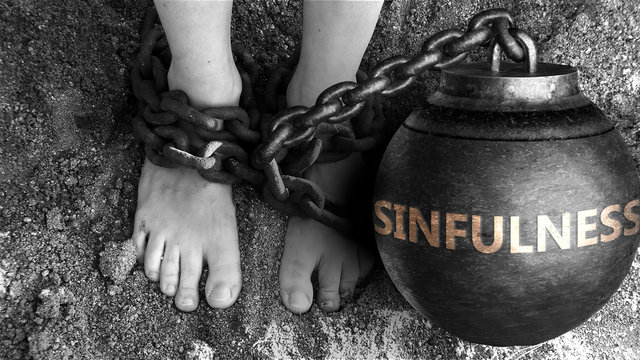
Let’s be very clear right up front. Disability. Disease. Illness. None of these are the result of moral failure or bad behavior. None of them have a theological cause.
I don’t want to speak unequivocally in opposition to exorcism and/or demonic possession. Personally, I have never experienced that, nor do I have a good theological framework that would explain it. However, I do have some experience of the wider world, and contexts in which evil spirits are common and exorcisms are an important part of a pastor’s ministry. So, I will be silent about what I do not fully understand and cannot fully explain.
However, at the same time, I absolutely refute as bad theology those interpretations that would suggest that someone born with a disability [or her parents] has sinned somehow, and that God has manifested this sin in a chronic illness, a debilitating physical or mental condition, or a compromised life-span. To imagine God this way is perverted, and to judge one of God’s beloved children this way is dreadful. And, given all we know about who God is, revealed to us in Jesus Christ, both are absolutely unwarranted by the larger biblical story that narrates a long, long history of God’s passionate love for the whole creation, including all God’s people, and the lengths to which God goes to care for them, protect them, and rescue them from danger and destruction.
Oh, I know: you can cherry-pick a verse here or a story there, which, on its own, is troubling. The Bible is complicated and complex, and its stories were told by people [inspired though they were] who were conditioned by their own times and experiences, and limited by what they knew and what they could see. However, their limits do not have to be ours, and the whole point of ongoing scriptural scholarship and study is to follow the ever-continuing inspiration of the Holy Spirit and respond faithfully to the God who is always doing a new thing, and revealing Godself in new ways [like medical advances and scientific discoveries].
So, one more time: Let’s be very clear right up front. Disability. Disease. Illness. None of these are the result of moral failure or bad behavior. None of them have a theological cause.
Now to the second point. What does it mean to call Jesus a healer? What does it mean to pray for healing? The answers to these questions are not always straightforward, and that is because healing is not always straightforward. Simply stated, healing doesn’t always mean cured. There are ways in which we can experience healing that don’t leave someone cancer-free, no longer dependent on medication, or with an extended lifespan.
Healing can mean reconciliation: in one’s family, in one’s larger community, or even simply within oneself. Healing can mean peace: being at peace with one’s diagnosis, being at peace with one’s future, being at peace with one’s own body and mind. And, perhaps most importantly, healing can mean love: giving love and receiving love—just as you are, with no strings attached.
I have to give a little shout out to Catherine, Princess of Wales here, who recently released a video in which she shared that she has completed her chemotherapy treatment and is now moving forward in a new phase of her life. In that video, she noted that her experience brought a real clarity to her and her family, emphasizing the simple things that are most important, including loving and being loved. What is more healing than that?
All of this is just a reminder that as Christians, we have a great responsibility when we read and interpret the Bible. We must take care that a message that is fundamentally good news about God’s radical love, acceptance and forgiveness of all God’s children doesn’t turn into a message of condemnation and judgment: blaming people for physical and mental challenges they are experiencing; casting God as the divine author of torment and judgment; and implying that better [moral] behavior would result in better health.
It is true that with God all things are possible, but that doesn’t guarantee that all things we desire will happen. All we know for sure is that while life can be both brutal and beautiful [or “brutalful,” as my yoga teacher says] all at the same time, in the midst of it all, always and everywhere, God is working to heal each one of us and all of us together—whatever that looks like—and, each one of us and all of us together are deeply, deeply loved.

 Happy Lutheran
Amen and amen. Thank you
LikeLike
Perfect words. We are all God’s children and we are loved unconditionally. Thank you for sharing your gifts with so many. CarolRyan 😘Sent from my iPhone
LikeLike