

Disruption is hard.
Many of us, as we continue to learn how to interrupt behaviors that are toxic and situations that are negative or harmful, recognize how challenging it is to take a pause, call timeout, or disrupt the flow. We don’t want to call attention to ourselves, we don’t want to embarrass others, we don’t want to make a scene. It is so much easier to just let things go and say something later.
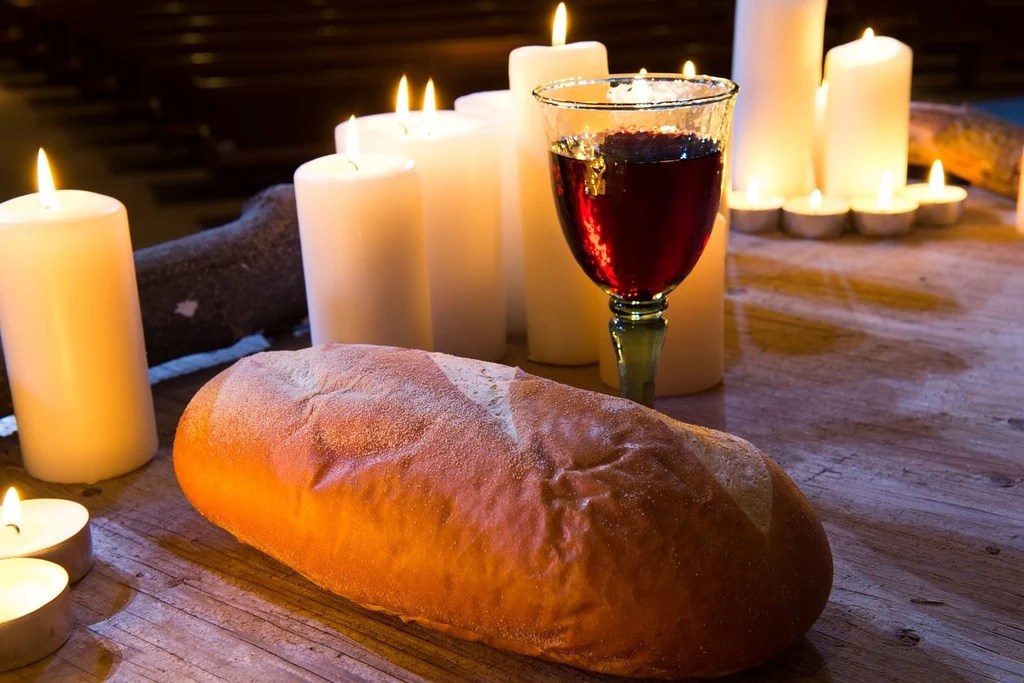
I know all this to be true, because this is exactly what I did yesterday, and I have been regretting it ever since. Here’s the situation. We had a large worship service on Wednesday, which is our usual weekly Eucharist service at Wartburg, because we had our big spring alumni event this week. This meant that the chapel was full, which was delightful. So, when it came time for communion, we had two communion stations, which meant that there were four chalices: two with wine, and two with grape juice. Through a very understandable bit of miscommunication, we ended up with both chalices of grape juice on one side, and both chalices of wine on the other side, rather than the usual practice–and what was announced–which is one chalice of grape juice and one chalice of wine on each side.
I was in the second row, which meant that I communed right away, almost before anyone else. As I went through, I took from the chalice that was supposed to have wine, and I immediately realized that there had been a mistake: instead of wine, I got grape juice. I thought about it for a moment, but, ultimately, I did nothing. I didn’t want to ask everyone to stop and take the time to figure out which chalice belonged where. I didn’t want to embarrass anyone, and I didn’t want to cause a scene. So I let it go. And, after the service, one of our alums, who has been very public about being in recovery, mourned the fact that, for the first time in almost a decade, she took a sip of wine, assuming it was grape juice–because we told her it was grape juice, and she trusted us. She was very kind, and she was very gracious, and she was very hurt.
I apologized profusely, of course, and immediately put some steps in place to make sure we avoid this confusion in chapel going forward. But, I can’t help but thinking about how relatively easy it would have been for me to just ask our communion servers to stop for a second while we sorted out the right placement of the chalices. How much time would it really have taken: 30 seconds? 60 seconds? I so easily could have done that, for everyone who came after me, but I didn’t and I regret it. I regret being so callus, and not thinking about others who might really be counting on receiving the right element.
So, I’m trying to learn from this going forward, and remind myself that even though in the moment disruption can feel hard, it usually is worth it; and there is someone, somewhere, who will be really grateful–for whom that disruption will be life-giving.


thank you for sharing this, Kristin, and for the encouragement to step into good disruption .
LikeLike