

There are many streams that make up the great coursing river of Christianity that ebbs and flows throughout the entire world. The streams all have their source in Jesus Christ, of course, but their shape, taste, depth, and breath all vary, flavored and colored by their different histories and geographies. But as they come together, they enrich each other with their unique nutrients, and the one church we pray for in the Nicene Creed is more vibrant and stronger for this diversity. So today, just briefly, I want to mention a couple gifts that the church universal has received from the Celtic Church. The Celtic Church itself no longer exists; it was absorbed into other churches that came into the United Kingdom, but it has had a lasting influence. [And, if you want to learn more about the Celtic Church, I suggest reading The Ecclesiastical History of the English People, by the Venerable Bede.]
The first gift that has come to us from the Celtic Church is the strong sense of God’s tangible, tactile presence in creation. The God of the Celts is not a distant God far off somewhere, but a God that is fully present and available to us right here, in the physical world.
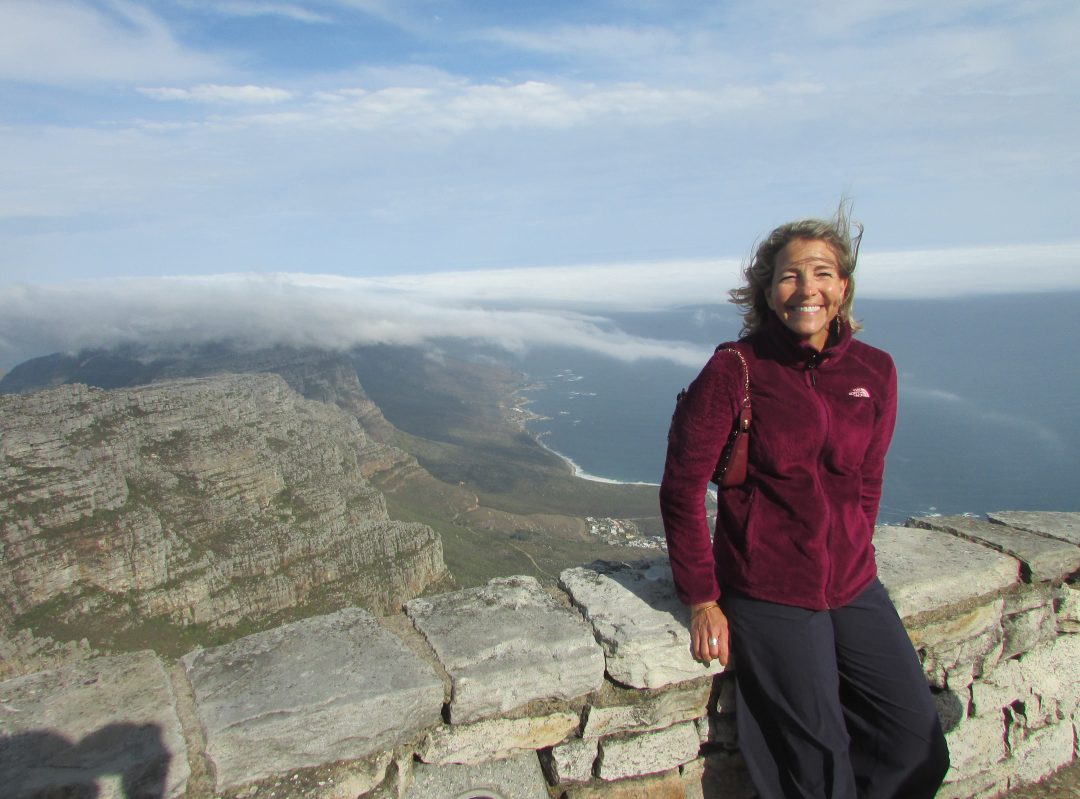
Traditionally, this was illustrated using the image of a “thin veil” between heaven and earth, and the presence of liminal spaces around us where this veil is rendered practically see-through, and we can see the Divine right here, in the midst of the muddy and the mossy, the grassy and the green.
Related to that, then, is the inherent value placed on the physical world, and the strong sense of interconnectedness between God, humanity and creation. The symbol associated with the Trinity—the equilateral triangle intersected with a circle—reflects this interconnectedness, as does the Celtic cross and the Celtic knot, the Lindisfarne Gospels and the Book of Kells, the hymns we have from the Iona community, as well as the prayer of St. Patrick.
Finally, I want to share another important characteristic that manifested in the monks that traveled from the local islands to bring Christianity to Great Britain. This was their confidence that Christ was already present in these “unchurched” rural communities: they were not bringing Christ to those who did not know him—even if they did not know his name—Christ was already there. And therefore, the monks did not come with a sword, or with an attitude of dominance. Instead, they shared with these people that they were already blessed with Christ’s presence, just without his name.
One concrete way that they embodied this spirit of humility and openness was to get down from their horses whenever they came to a village or met someone on the road; they then walked beside the horse so that they did not speak down to anyone, but talked with folks face to face, as they walked along.
I commend that metaphorical practice to us all, as we celebrate the gifts of the Celtic Church, and give thanks to God for its faithful witness to the gospel of Jesus Christ.

 Happy Lutheran