
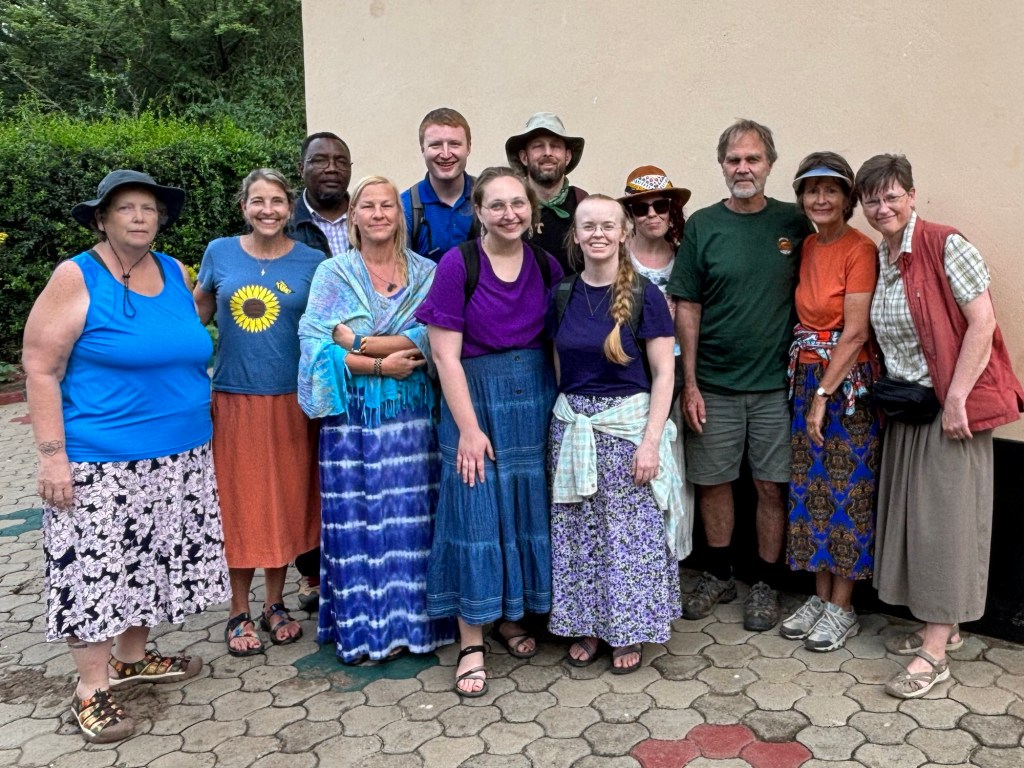
This morning, we went out to the Ketumbeini Medical Clinic that is owned by the ELCT, and is run by missionary Steve Friberg. He has been here doing this work for over 20 years, and it was very interesting to hear about the changes he has seen in that time.
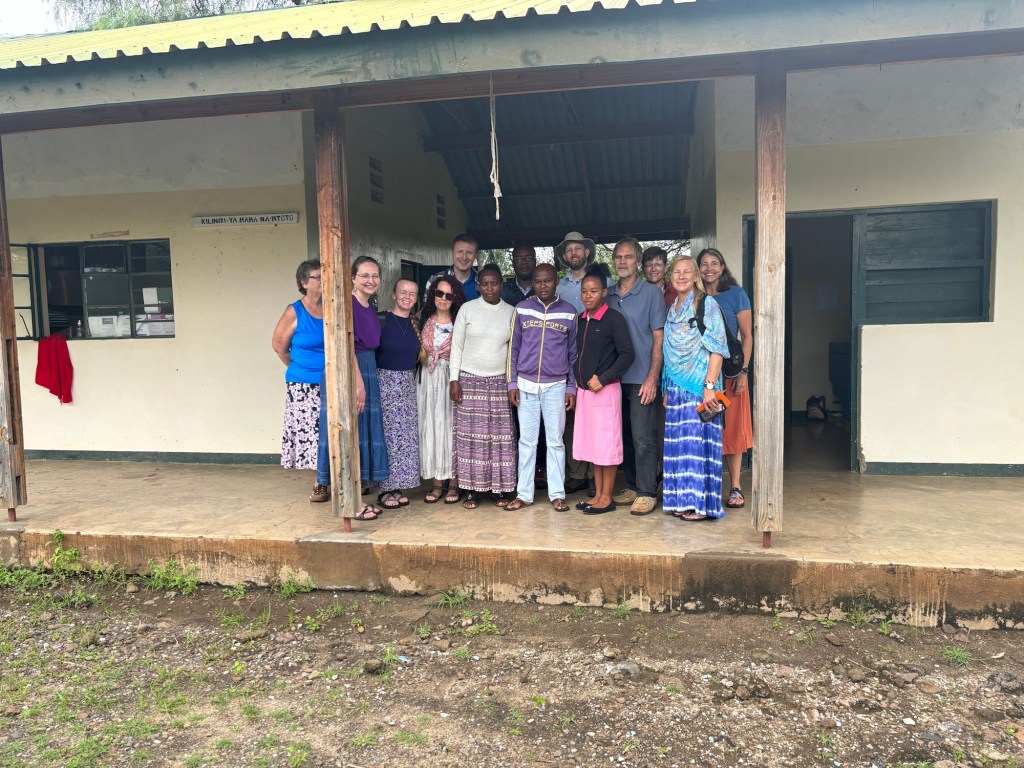
The building was built in the 1970s by Dave Simonson, the same missionary who started the Maasai Girls Lutheran Secondary School.
The biggest work of the clinic is doing immunizations for children; the clinic has been doing that work for over 50 years. There is basically no measles or polio here thanks to those efforts. They vaccinate for 12 different deadly diseases; and as just one example of why that work is so important, Steve told us that the most common cancer here is liver cancer, and here, that is caused by Hepatitis B. He believes that it will be all but eliminated in a generation, thanks to the Hep B vaccines that they are now doing. Another example is cervical cancer, which is second most common cancer here. Now that they have the HPV vaccine, that too will be eliminated.

Another important aspect of their work is prenatal care, and while the majority of women still deliver their babies at home, the government and church are really pushing for women to deliver at clinics, because it is so much safer.
Finally, it is also important to mention the nutritional support that the clinic provides. We are here now after there has been lots of rain, and so everything looks very lush and green. However, there is a five month period where it is extremely dry, and it causes lots of food insecurity. During those times, the clinic provides peanut butter, milk powder, and sorghum flour, especially to women who are pregnant and breast-feeding.
Steve emphasized that the ELCT has been very intentional about being holistic, so in addition to spreading the gospel and building new churches, they also have had a consistent focus on education and medical care. I appreciated him saying that being here has really changed him and made him more open about his faith. From being in Tanzania, he has come to really appreciate how faith is meant to be shared, and shown to others; it is not just an individual thing.
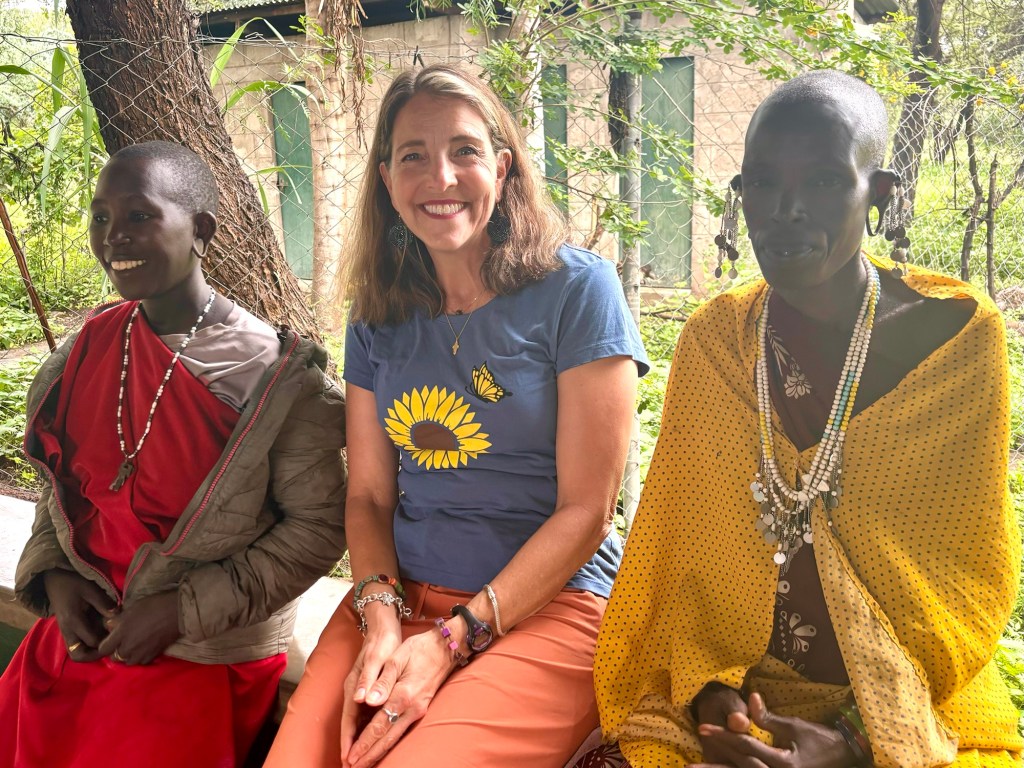
I also came away with a deep appreciation for how much of a change education can make, especially for women and girls. Over time, Steve has seen the way that educated young women, even those who have just gone to primary school, have more confidence and are more articulate about their symptoms, and the time-frame of their symptoms. They are less passive, and are able to understand and use money to pay for their visits.
Educated women simply have more agency over their own healthcare, and over the size of their families. We learned that the size of families is decreasing, and more women are coming to the clinic for birth control, so that they can have families of two or three children, rather than six or seven. This is important, because family planning is a critical strategy in dealing with climate change challenges. In this area, there is currently less grass, less rain, and less cattle than in previous decades, and therefore, families with fewer children have a much better chance of thriving.
Related to this are the changing attitudes around FGM (female genital mutilation, sometimes called female circumcision) that also are happening with education. It is happening less and less as time goes on, and mothers are less likely to put their daughters through that if they have some education. Technically, FGM is illegal in Tanzania, and both the church and the government actively discourage it.
Finally, Steve noted that currently 45% of the medical care in Tanzania is being provided by the churches, but the government is building more facilities and taking more of that work over as medicine itself becomes increasingly complex and expensive. The small clinics that the churches run simply can’t afford some of the care that is required now, so in Steve’s view, it is a good thing that the government is setting up larger clinics and taking on more responsibility for healthcare in the country. People’s medical care has really improved in three decades, and it is a testament to the stability of the government in Tanzania, and the government’s investment in its people.

So much of what we have done on this trip has felt “once in a lifetime,” but our experience this afternoon definitely falls into that category.
After lunch, Steve and Bethany took us out to a remote boma (a traditional Maasai extended family compound), where we were bringing nutritional supplies for the pregnant and nursing mothers (like I mentioned earlier). We drove a few kilometers, then we walked the last hour of the way, which was beautiful.

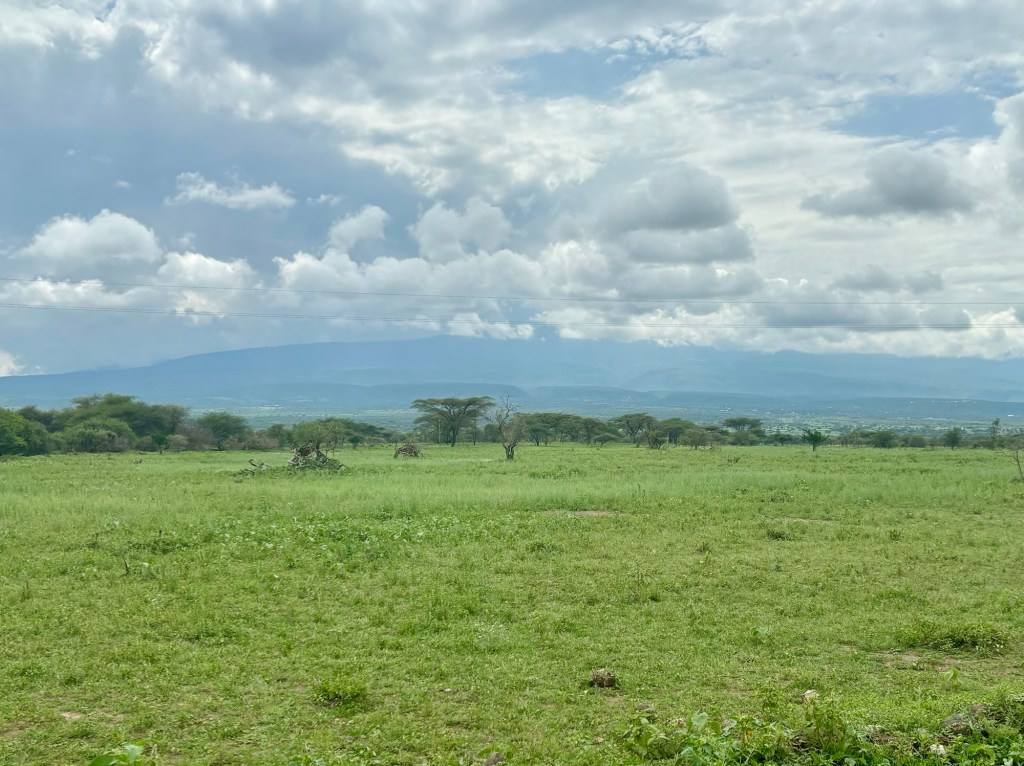
It is really humbling to see the relationships of trust that Steve, as a doctor, and Bethany, as an educator, have built up in their years here. He had spoken with the elder of the boma, who had identified around 40 women to whom we gave sorghum flour, a mango, and a small container of peanut butter.

Along with that, Steve did a bit of nutritional education (and family planning!), speaking to one of the women who understood Swahili, who could then translate into Ma for the rest of the women.

We were very privileged to be able to share the blessing of these food items with these women.
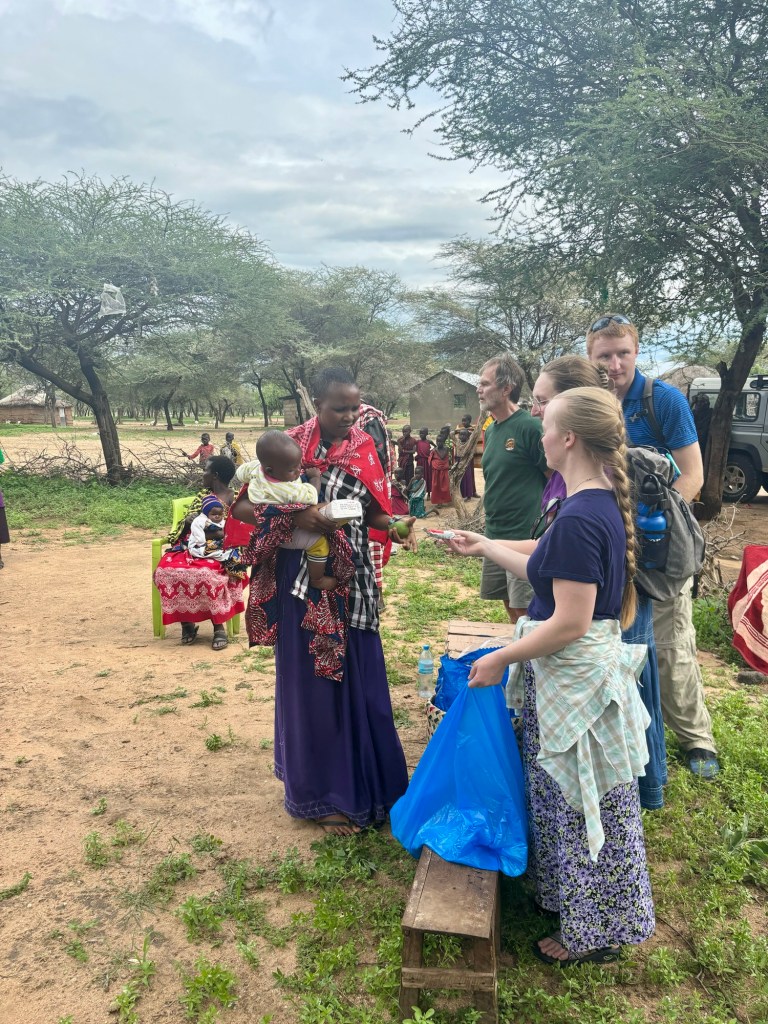
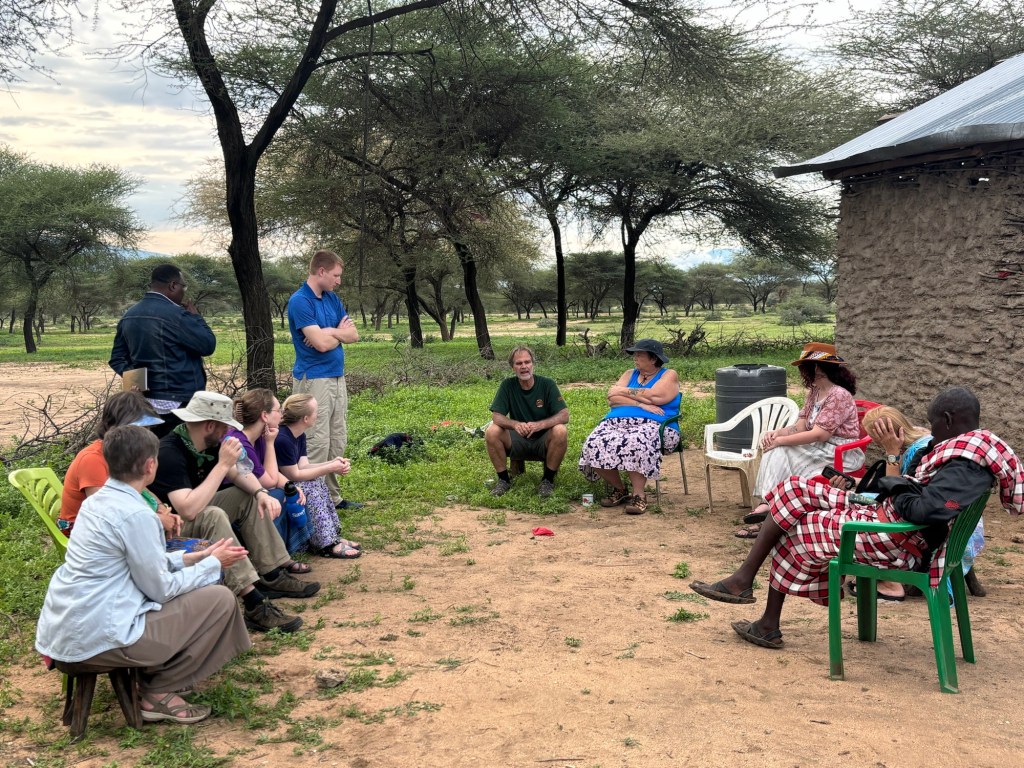
Then, we stayed around another hour, and had some fantastic Maasai chai, which always has a smoky taste because they use ashes to clean out the gourds they use to store the milk.
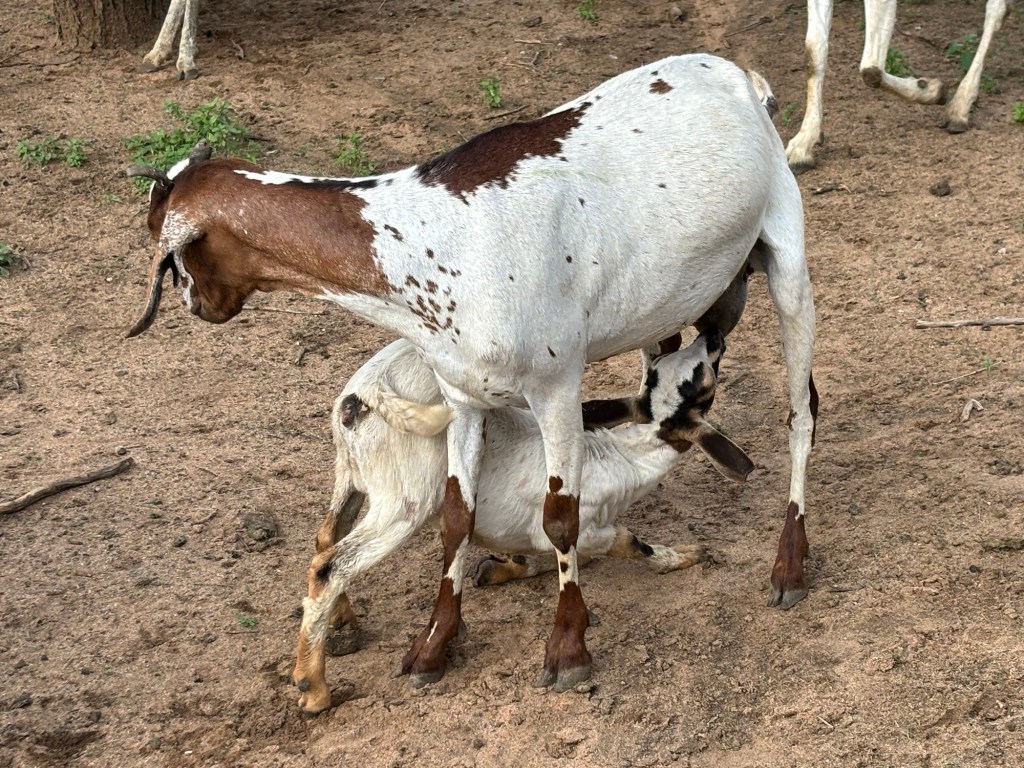
We stayed long enough to watch them bring in the goats, which was such an incredible experience. The little lambs and kids stay at the boma until they are about three months old, and so when their mothers were coming home, they ran toward them and started bleating, and it was amazing to watch the mothers and their little ones go through the process of recognition— calling and sniffing—until they found one another. Some of the Masai men would help, scooping up the very young ones and bringing them over to their mothers.


The majority of Maasai in this area are Christian, and this family boma was no exception; there was a Christian church a couple kilometers away, which is where they attend and where the children are baptized. There is also a new school relatively close by, and the children go there for the first two grades; after that, they board at the Ketumbeini primary school, which we visited yesterday. There is also water that comes down from Mount Ketumbeini in pipes, and they walk about 5 km to get fresh drinking water; that is also where they water their herds.

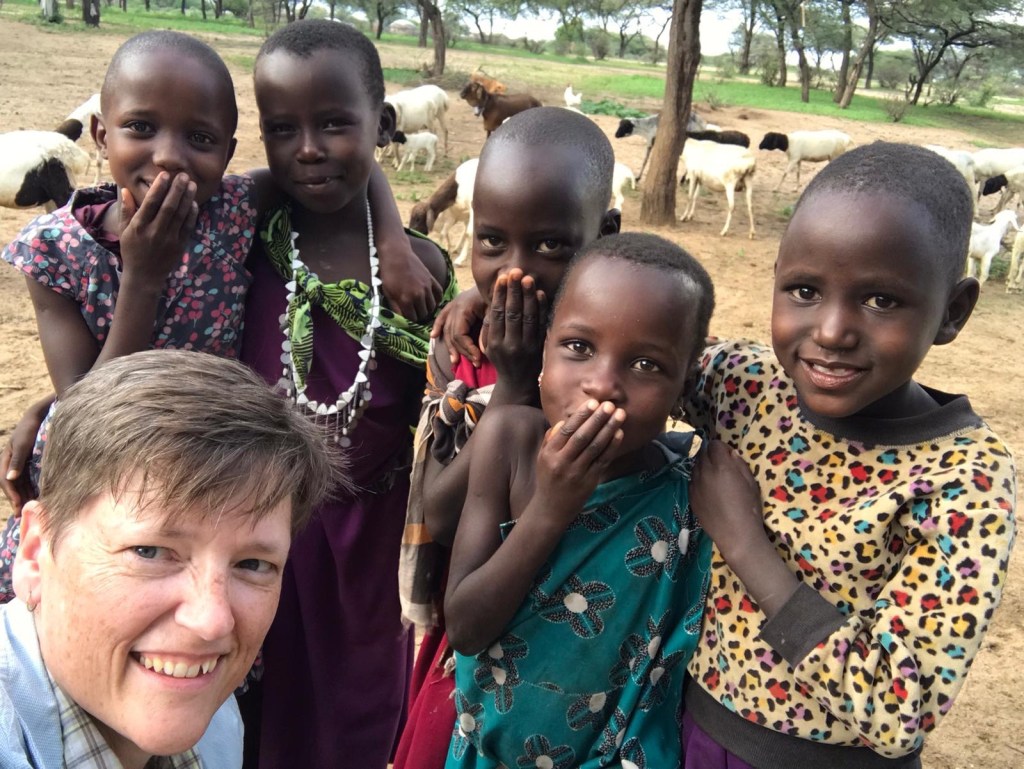

The whole afternoon was incredible, and I was just in awe of the relationships of trust that Steve and Bethany have built over the years— we had the experience we had today because of those relationships. They are incredibly faithful, dedicated people.
I was thinking about the experience of pastors and deacons, too, and the importance of building those relationships of trust in their contexts as well, and being willing to stay long enough in a place for those relationships to happen.
I can’t say enough about the day. It was amazing.


 Happy Lutheran