

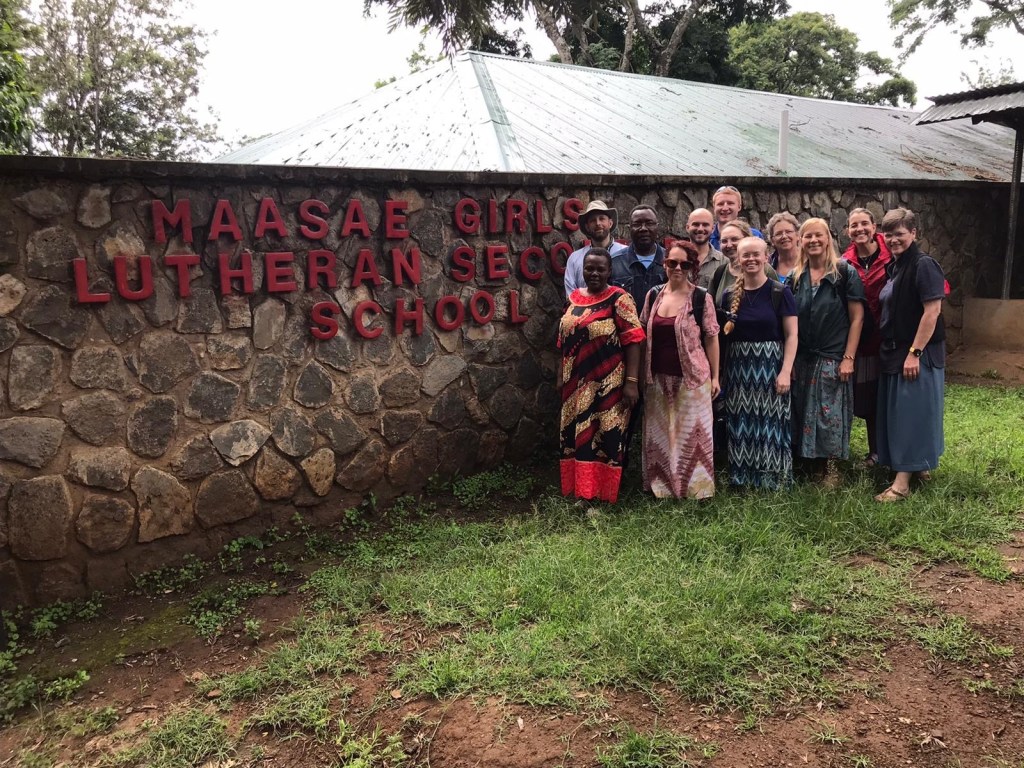
Today we spent the day at the Maasai Girls Lutheran Secondary School (MGLSS) and it was an absolutely amazing experience to hear the story of the school, the story of the graduates, and to meet some of the girls. This is where Beth first taught 25 years ago, and it was fun to be back here with her and hear her stories, too.
The school was started by Lutheran missionary, Pastor David Simonson, who founded the school in 1995. It is owned by the North Central diocese of the ELCT, and Bishop Thomas Laiser, a Warburg Seminary grad, was the bishop in this diocese when the school was founded. This is the mission of the school: to educate students from marginalized Maasai communities who have the ability and desire to learn, but whose families either can’t afford to send them to school, or are resistant to allowing them to attend.
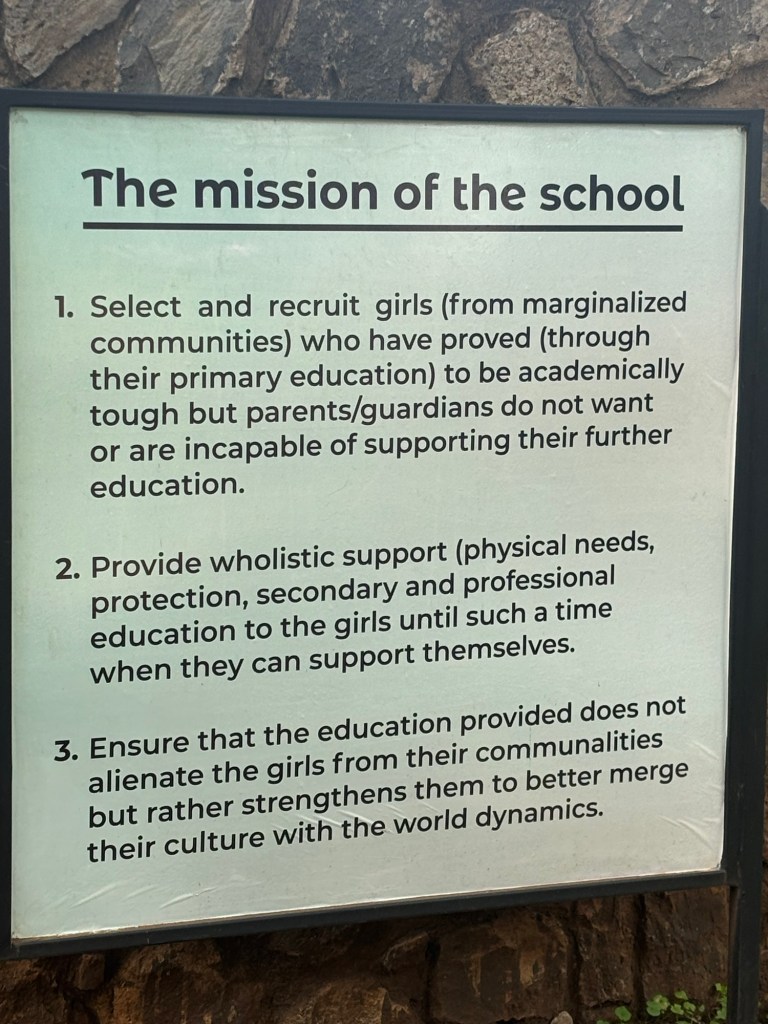
Even today it is still a challenge to educate these girls, because for many of them, their fathers want them to get married, so that they receive the bride price in cows for them. So, there is a great deal of pressure to keep the girls home, and not let them be educated.
And even in the larger Tanzanian society, the Maasai are often discriminated against, as they are stereotyped as dirty and ignorant. But here, in the school environment, the girls can thrive. The education is rigorous, and they work very hard, but they all are nurtured and supported together, just as they are. The school motto is, “We are the architects of our own destiny.”
We know this to be true. Over and over around the world, it has been shown that educating girls can have a dramatic positive effect on a whole society. Women are strong and resilient, and they know how to care for their families and communities. They know how to make money, they know how to save it, and they know how to use it to better the lives of their family members and neighbors. And so the education that is happening here is having ripple effects throughout individual Maasai families, larger Maasai communities, and even Tanzania as a whole.
In Tanzania, primary education is mandatory, but secondary education is not, and so this is often when many Maasai girls are pulled from school. It is not uncommon that Maasai girls are viewed as ready for marriage right after primary school, around age 12 or 13.
Girls are often promised in marriage during primary school, and so it has happened that even if the girls are able to start at the secondary school, when they go home for break, they can get trapped into an unwanted marriage, or even be raped and end up pregnant. For this reason, both the education and the environment of MGLSS are life-changing, and even life-saving.
Education at MGLSS goes from Form One to Form Six; it is roughly the equivalent of middle school and high school in the United States. The capacity of the school is 350 girls, and it is a boarding school; 100% of them live on the campus. This is because often their families can’t support them, and travel would be impossible because many of them come from long distances.
They study 12 subjects, including Computer Science, Bible, Geography, Chemistry, and English, just to name a few. All instruction is in English, except for the Swahili class. (The girls’ first language is typically Maa, the language of the Maasai people, or another dialect.) The vast majority of the students go on either to college, where they can earn a diploma in teaching or nursing, for example, or university, where they can earn a bachelors degree.
Every student at the girls school is sponsored. The cost is $1200 per year, and includes three meals a day, books, uniforms—everything they need. The sponsorship runs through Operation Bootstrap Africa: here is the website, and there you can see videos about the girls and about the school: https://bootstrapafrica.org/
You can also learn about how you could sponsor a girl or support the school!
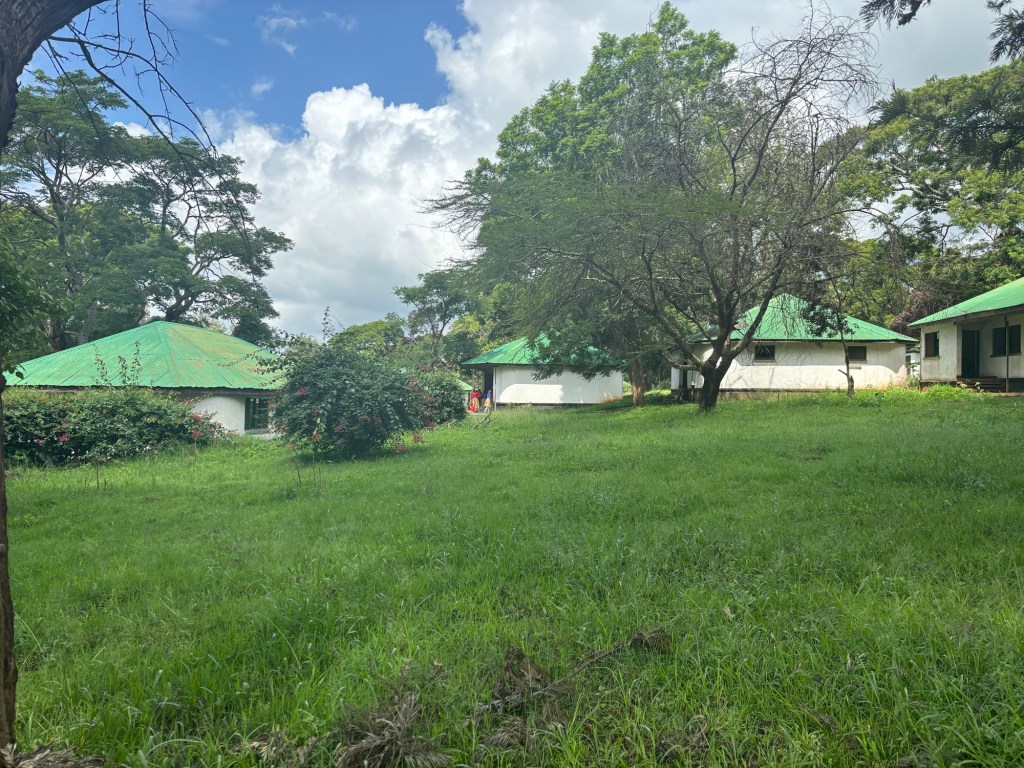
Here are a few pictures of the school.


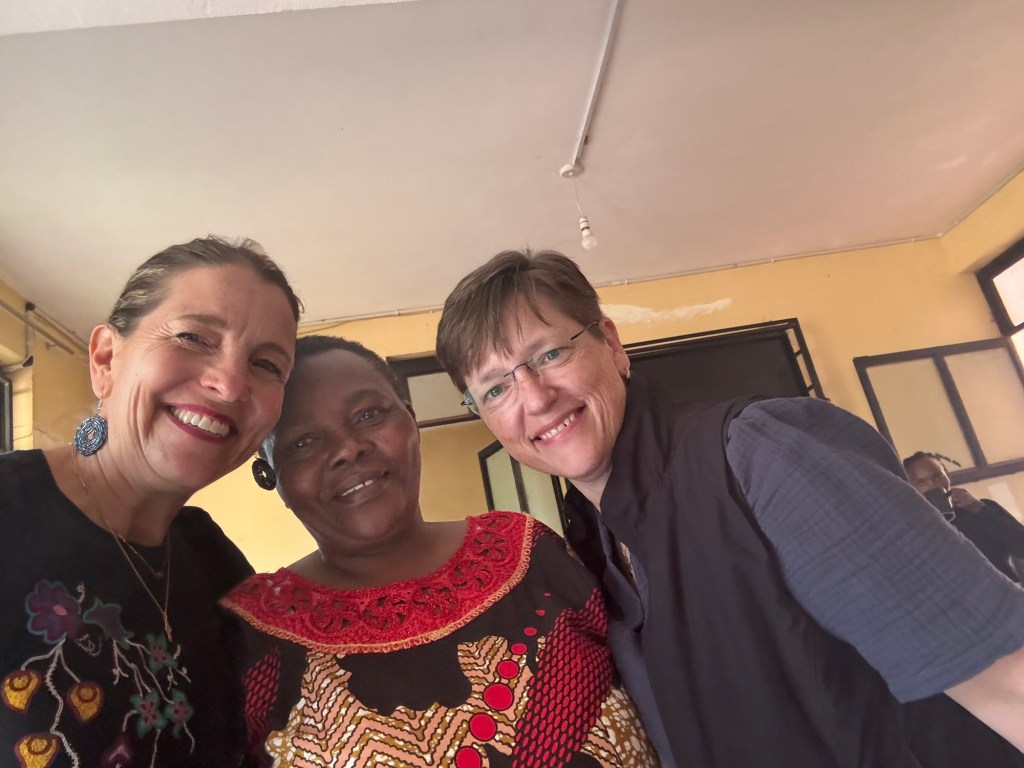
We spoke with several of the teachers, which was really inspiring. Teachers certainly can earn more money at government schools, but the ones we spoke to really feel like they are making a difference teaching at MGLSS. One of the teachers, Helen, who teaches computers, feels like she can be a role model to the girls—she is Maasai herself—and can inspire them with what might be possible for them, too.

We heard many stories from Ciwila Shirima, who has taught at MGLSS for over 25 years, teaching Civics and History. She has been instrumental in rescuing many girls from dangerous home-life situations, and finding the resources they need to be able to attend school and thrive. She is an absolute force for good!
We heard that there have been some changes in cultural attitudes: families are seeing that when the girls get educated, they give back and become blessings to the whole family. For example, after they get a good job they will return and build their family a nicer house, and provide educational opportunities for the other children. This means that families begin to want their girls to come to school, instead of resisting it. But I don’t want to overstate that: as we all know, cultural change is slow. But it was heartening to learn that the first Maasai woman pastor, doctor, pilot, international journalist, and district commissioner all graduated from the school, and there are hundreds of women teaching in Maasailand in primary schools, who also serve as role models for other girls.
It is also important to mention that the Maasai culture is not left behind when the girls come to school: they teach traditional beading; once a week worship is in Maa; they wear the traditional Shuka and beads at graduation; and there is an amazing Maasai choir that sings traditional songs. Also, the shape of the classrooms is like a boma, and the chapel is in the shape of a Maasai shield. The chapel stands at the center of the campus, like the father’s house does at the at a boma.


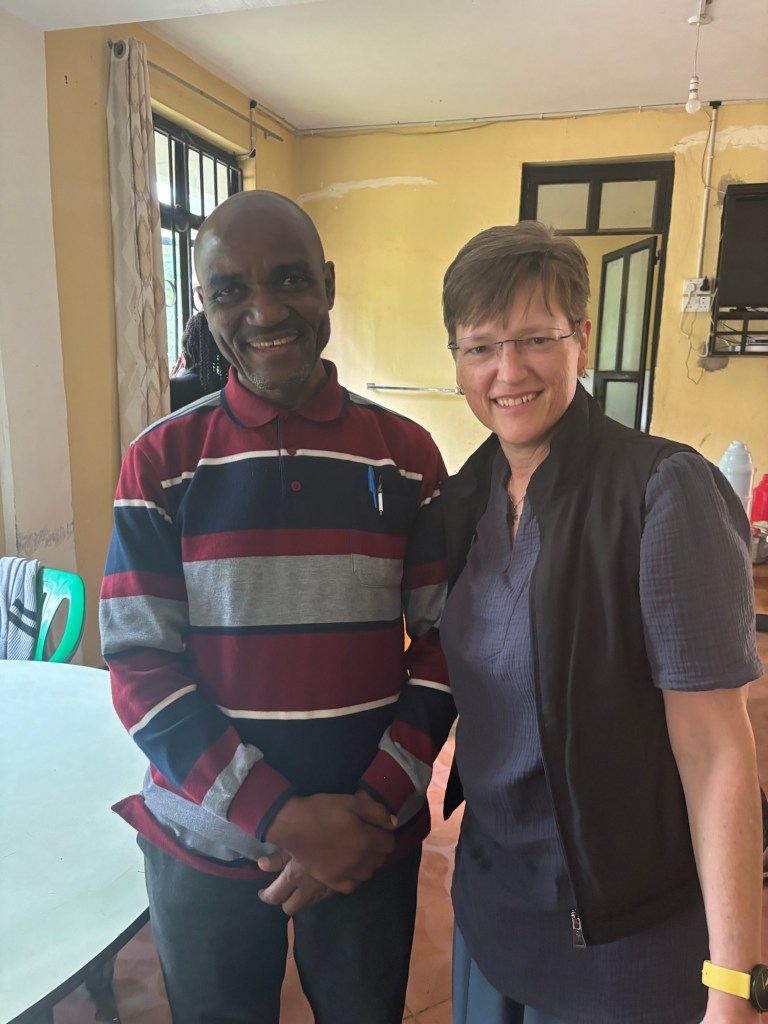
Finally, we met Mwalimu Mollel, a long-time math teacher, who is himself Maasai with daughters of his own. It was great to hear him advocating for women’s education, and it reminded me how important it is that women’s education and advocacy not be considered work that is just for women; it is the work of men and women together—fathers, brothers, uncles—if cultural and societal norms are going to change.
We ended the day worshipping with the girls at their evening prayer service—I can’t begin to describe how beautiful their singing was. We stayed and talked as long as we could and then walked home. It was an inspiring day!

 Happy Lutheran