
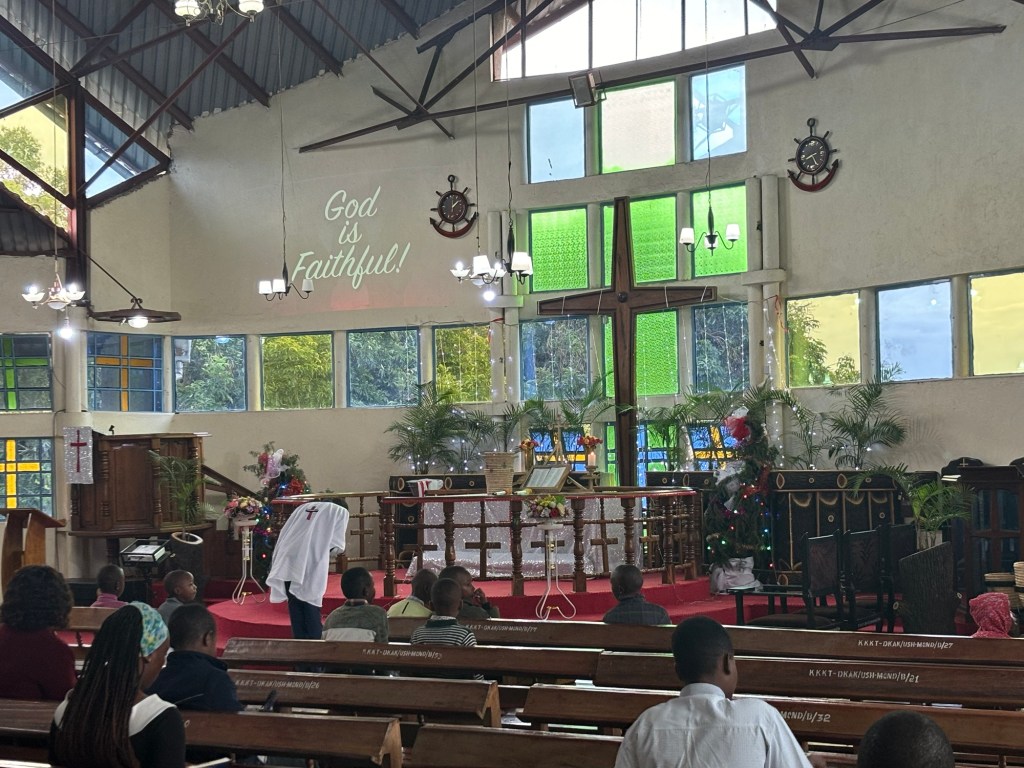
We had another great day today! We started our day with a worship at 8:30. There was lots of singing beforehand, as people drifted in, and the service lasted a little over 2 1/2 hours. But I can honestly say that it went by very quickly. Everyone wears their Sunday best to church, and I really enjoyed looking at all of the different styles of dresses. And the coats! Coming from Dubuque, I don’t need a coat when it’s 70° out, but coming from Tanzania, apparently it’s a little chilly in the mornings!
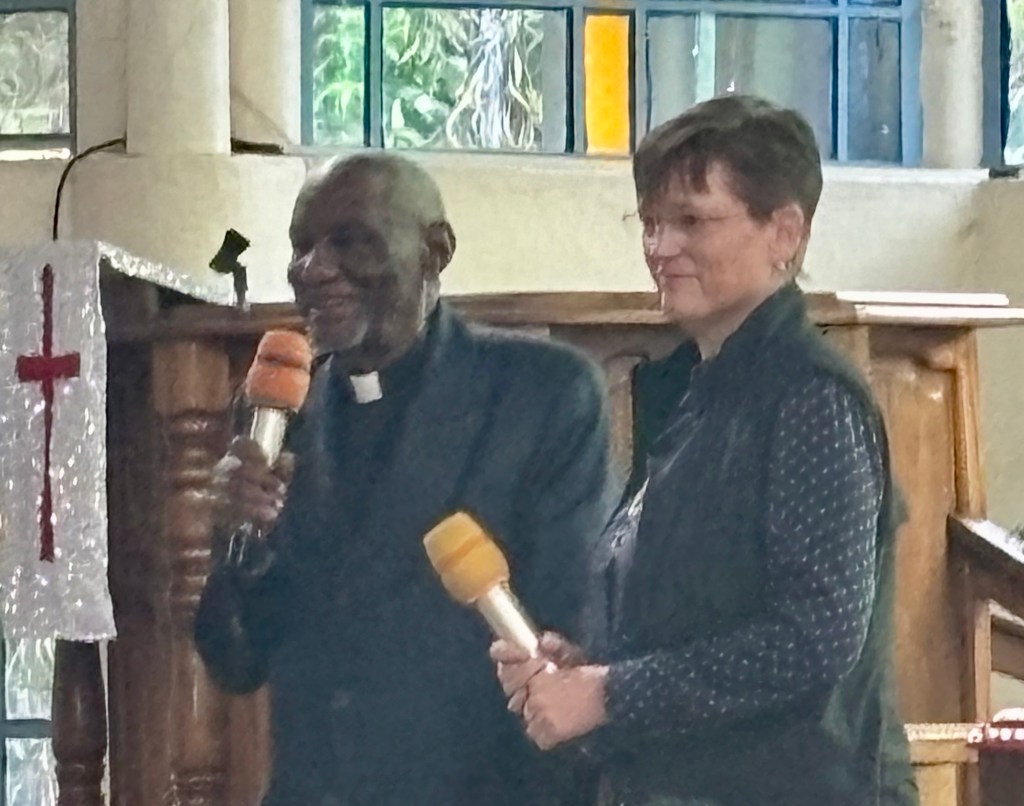
We were very warmly welcomed by the pastors, who first called up Beth, and acknowledged the deep relationships that she has built here over many years. It was wonderful to see how beloved she is—and with good reason!
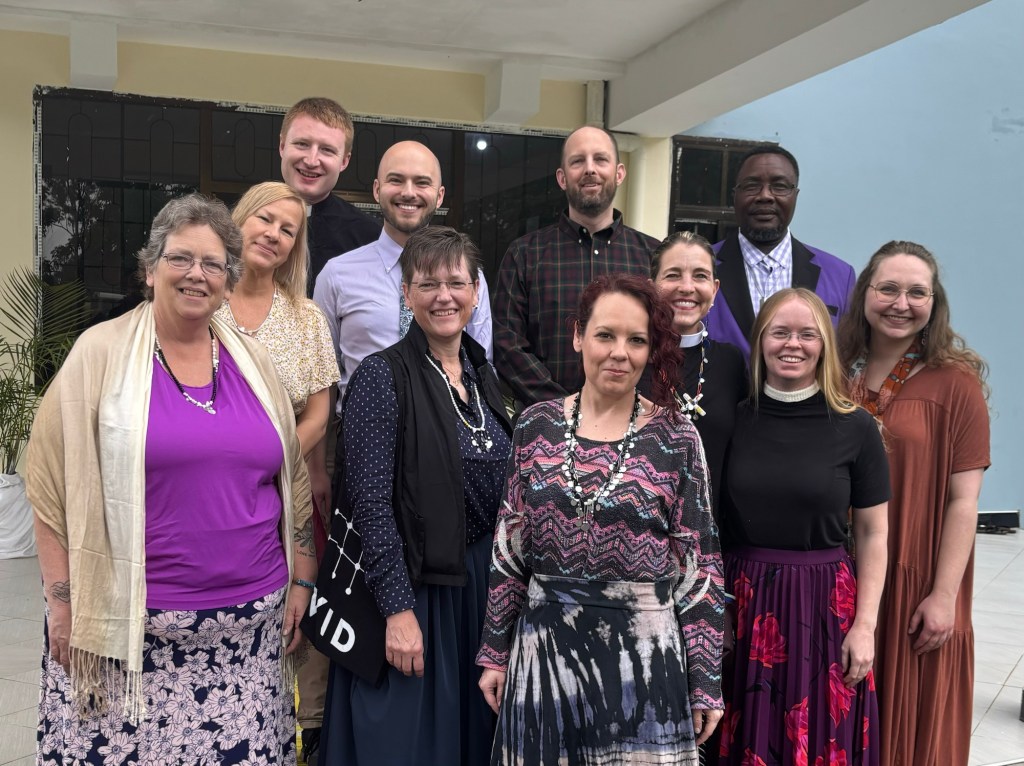
I was called up next and invited to introduce our group, and I also gave a brief homily. I am so very grateful to our current student. Lotegeluaki Lengai, who is originally from Tanzania and who is able to do all of the translating. He did a fantastic job! It has been so lovely to have him as a part of the group, as he does a great deal of both language and cultural interpretation back-and-forth. It’s a bit of an awkward position for him, but he has been navigating it so well.

There are lots of things that I could say about the service, which was so interesting and meaningful, but I think the main comment that I will make is how much I appreciated the way space was created in the service for so many different people to be seen. For example, at the beginning of the service, the young children were invited up to the front and several of them were invited to share a memory verse, for which the congregation enthusiastically applauded. One of the boys who shared a verse was so young that the pastor actually held him in his arms—and he did beautifully! Another example was when people were invited up to request a specific prayer or blessing for something going on in their life. And finally, toward the end of the service, all of the children who were going back to school—of any age—were invited up for a special blessing. And if the children couldn’t be there, the parents came and stood in their place. We had some good conversation over lunch, reflecting on what we had experienced in relation to our own perspective with worship in the United States.
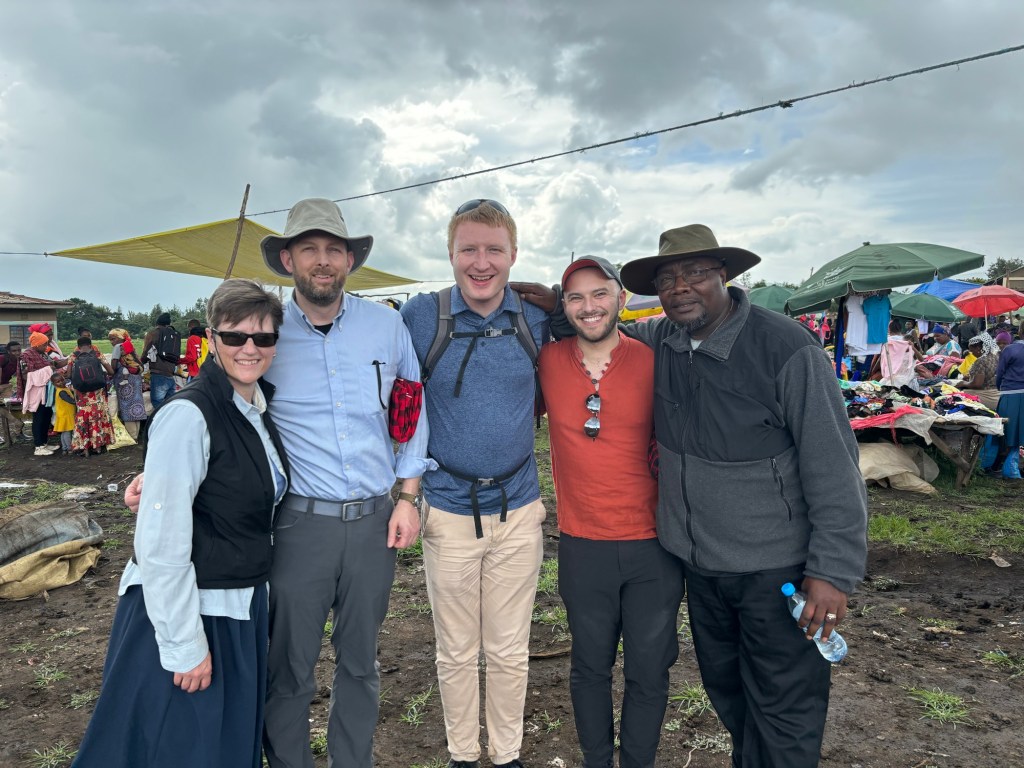
Then, after lunch, we went to the market. It was very fun to walk around and see the kind of things that were for sale. But, we were on a mission! We all selected fabric, and went to Rebecca‘s house, who is a dear friend of Beth’s. She had invited a seamstress to come and take our measurements, so that we could have pieces of clothing custom-made. Some of us chose dresses and some chose clergy shirts. I promise I will share a picture when we all get our finished items later in the week!


We ended the evening with a very informative presentation by Daudi Msseemmaa, the ELCA representative for East Africa. He is based in Arusha, and oversees the ELCA’s work in Tanzania, South Sudan, Rwanda, Kenya, and Ethiopia. We heard about the challenges of the very new Lutheran Church in South Sudan, and, of course, the challenges in the very new country of South Sudan itself. He said, “Nation-building is almost always a horrible, ugly process that takes decades and decades, and that is true everywhere in the world.” And in the midst of these challenges that South Sudan is experiencing, the church is very important there. The church brings hope in a context marked by conflict, the effects of climate change, and hunger. He said, “It is beautiful and terrible all at the same time.”
He also talked about the challenges of bad theologies in East Africa—which, of course, we have in the United States as well. He said that you can find hope in the gospel, or you can be sold hope. Only one of those “hopes” is ultimately transformational. He noted how important education is, and that supporting education is one important way that the ELCA can make a difference. He said that we use the educational institutions of our global partners to try to transform individuals and societies.
He also talked about a bit about the history of missionary work in East Africa. (He started in 2019, so he is relatively new in his role). He said that at one time there were 250 missionaries in East Africa, and now the roster is 11 missionaries, and that includes both full-time and shared positions. However, he also noted that missionary work has changed, and many aspects of that change are good: what to celebrate, he said, is how the local churches have been empowered to take ownership of certain ministries.
In closing, he said, “the core part of my job is to strengthen relationships,” and as a part of that work, he talked about ecumenical partnerships in East Africa. There is an All-Africa Conference of Churches, and different councils of churches in different countries. So, for example, there is the Christian Council of Tanzania, which is made up of 11 mainline denominations. One concrete example of both ecumenical and interfaith partnerships working well together occurred during COVID, when Catholics, Muslims and mainline Protestants all came together to create a 26 page document to talk about how they could use their pulpits to help people stay safe at a time when the messaging around COVID was unhelpful at best.
He left us with a lot to think about as we continue to learn about the work of the ELCT.

 Happy Lutheran